
















The Multiverse of Trust: Education • Digital Media • Gaming • DeFi
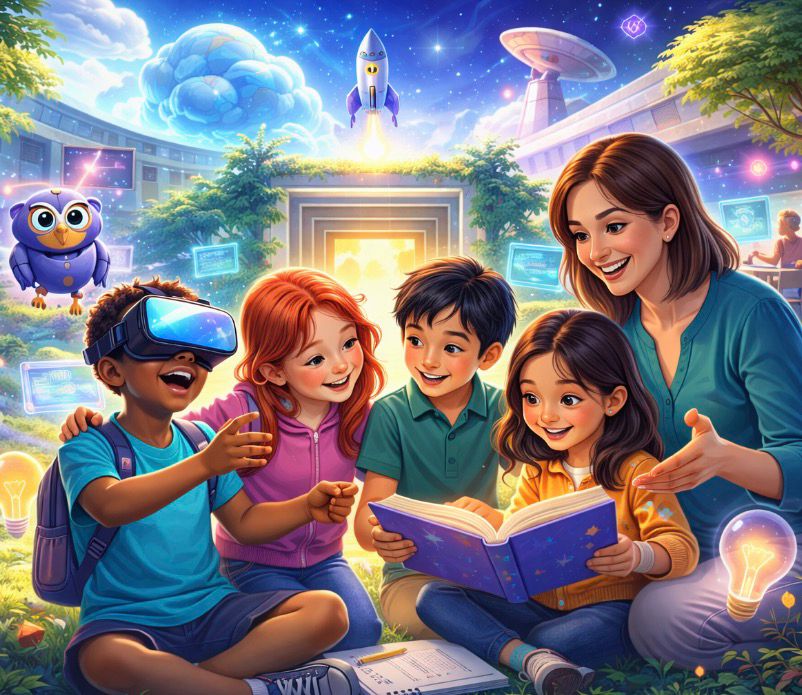
Every day, often before the sun has risen, millions of young people open a screen and step into a universe that did not exist for previous generations. They study on digital platforms, build friendships in games and chats, experiment with identity through avatars and profiles, and move value across new financial ecosystems built on code. For them, this is not a separate dimension from “real life”; it is the fabric in which their learning, relationships, fears and hopes are interwoven. It is, in every sense, their multiverse.
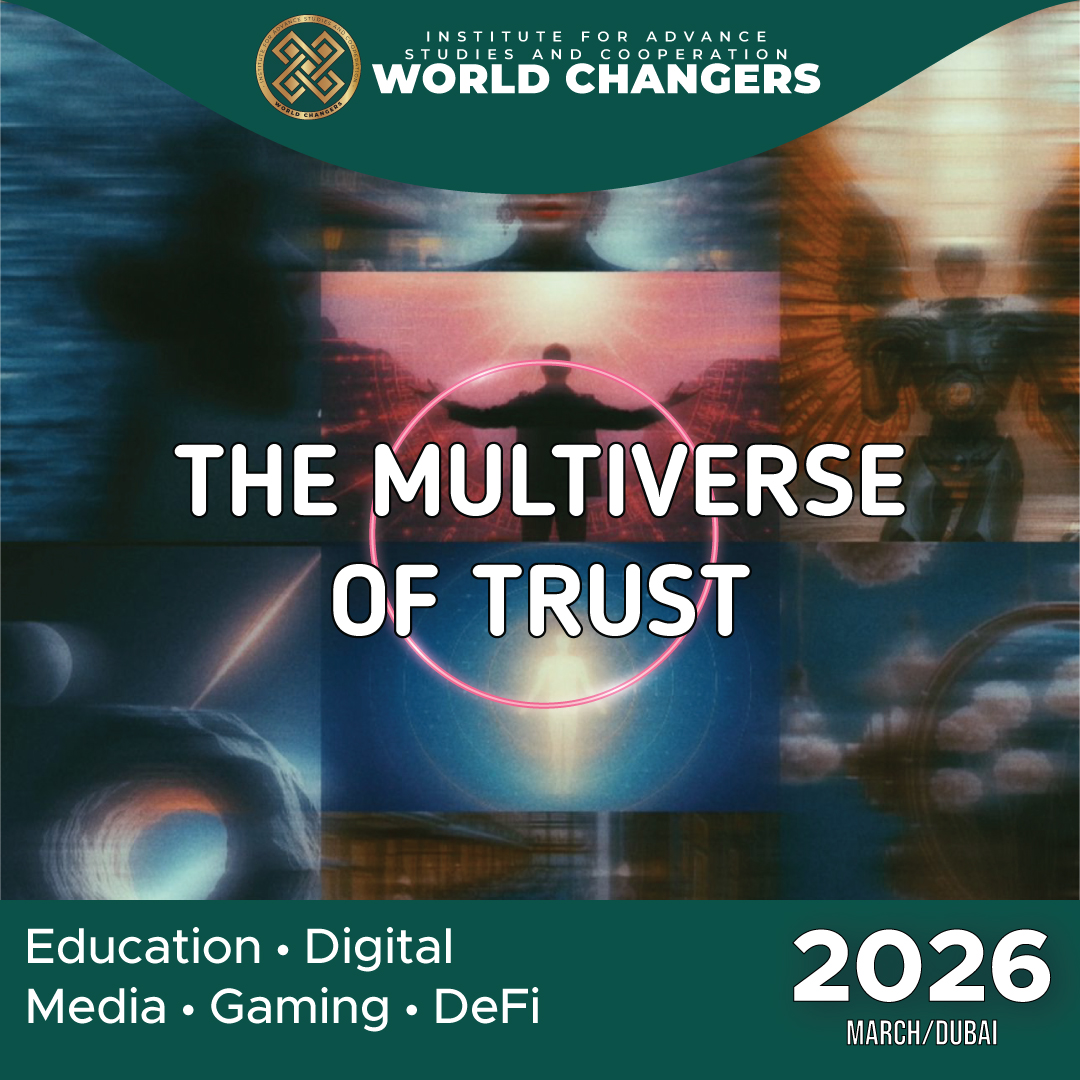
From this awareness is born the new mission of IASC World Changers: “The Multiverse of Trust: Education • Digital Media • Gaming • DeFi.” Rather than asking whether these digital universes should exist – they already do, and will only grow – the initiative poses a more demanding question: can this multiverse become a place of trust, dignity and authentic human flourishing?
Young people now inhabit environments of attention that are carefully engineered: social networks, streaming platforms, immersive gaming and esports, metaverse spaces and decentralised finance. These environments carry extraordinary potential. They open new pathways for learning and collaboration, enable creativity to cross borders, and offer access to innovative models of participation and economy. At the same time, they expose younger generations to addictive design and dopamine loops, to anxiety and loneliness, to the fragmentation of identity, to misinformation and radicalisation, and to forms of financial manipulation that corrode confidence in institutions and, more profoundly, in oneself and in others.
The Multiverse of Trust does not begin from fear or nostalgia, nor from an abstract rejection of technology. Its intention is to humanise, not to demonise. The mission aims to accompany a transition from dopamine-driven design to genuinely human-centred design; from purely speculative logic to long-term value and inclusion; from polarisation and fragmentation to responsibility, reciprocity and trust. At its core lies a simple anthropological intuition: no digital future is sustainable if it neglects the integrity of the human person.
For this reason, the initiative is articulated around three interconnected dimensions that correspond to the unity of the human being. The first is molecular health: understanding how digital overload, irregular sleep, constant stimulation and financial stress affect the brain, hormones, metabolism and long-term health, and how preventive medicine and longevity research can offer concrete protection for the bodies and brains of the young. The second is psychological health: confronting the rise of anxiety, isolation, dependency and identity crisis in hyper-connected environments, and promoting resilience, emotional literacy, healthy relationships and a real sense of belonging, both online and offline. The third is spiritual integrity: safeguarding dignity, conscience and meaning beyond the logic of data and profit, recognising the need for interior life, transcendence, vocation and ethical discernment. Only when body, mind and spirit are considered together with seriousness and care can a digital and financial ecosystem truly support human flourishing.
If we wish to speak to youth in a credible way, we must also meet them where they already are. This is why, in the Multiverse of Trust, gaming and esports are not a marginal curiosity but one of the central pillars. Today they are a theatre of identity and aspiration, a school of teamwork, strategy and perseverance, and a powerful engine of cultural narrative. Within this world the initiative is guided by universal values that are simple to name and demanding to live: equality, fair play, inclusion and innovation. These values, which resonate with the best traditions of both education and sport, will shape youth laboratories, dialogues and creative sessions, and will inspire new ways of conceiving tournaments, platforms and communities. The ambition is to show that competitive play can become a training ground for character and trust, not merely for performance and profit.
The first major chapter of this mission is planned for March in Dubai, chosen among various candidate cities for its unique combination of technological ambition, institutional vision and commitment to tolerance and coexistence. The gathering is conceived as a single narrative day, moving from laboratory to summit, from analysis to celebration. During the daytime, in a leading innovation and gaming hub, a “Laboratory of Trust” will bring together young people, educators, gaming and esports communities, DeFi and Web3 actors, institutional representatives and experts. Sessions such as “Dopamine, Design and Freedom” will see neuroscientists and longevity specialists explain how the architecture of apps, platforms and games affects bodies and brains, and how healthier rhythms can be restored. Workshops on “Gaming, Avatars and Identity” will explore how virtual worlds shape self-perception, cooperation and conflict, and how games can become spaces of fair play, inclusion and constructive creativity.
Alongside these laboratories, co-creation studios will invite young participants to draft a Youth Charter of Trust, articulating in their own words what they expect from platforms, educators, institutions and communities. In parallel, technologists, game designers, regulators and educators will work on concrete commitments for responsible design, youth safety, mental health and inclusive financial innovation. Ethical and cultural reflections will be constantly interwoven with lived digital experience: youth leaders, esports athletes, creators and technologists will stand alongside scientists, educators, faith representatives and policymakers. The Multiverse of Trust intends to build with youth, not simply speak about them.
In the evening, the scene will move to a major cultural landmark in Dubai. A high-level panel on “Trust, Tolerance and Transcendence in a Digital Age” will bring together voices from the United Arab Emirates, from the Holy See and other religious traditions, from international spiritual leadership, and from the worlds of youth and innovation. They will reflect on how education, media, gaming and DeFi can become instruments of peace, inclusion and human dignity rather than vectors of division and exclusion.
At the heart of the evening, a special IASC World Changers Youth Award will recognise young women and men who are already leading ethical change through education, digital media, gaming, esports, DeFi or community projects.
The day will culminate in an art–science performance that unites live music, live painting and real-time neuro-technology. Brain activity, captured during the performance and processed by artificial intelligence, will be translated into light, colour and sound, offering a living metaphor of a digital multiverse in which technology amplifies, rather than replaces, the depth of human interiority. An interactive installation – the “Multiverse of Trust”– may remain as a symbolic legacy to the host institution, inviting visitors to experience how their choices and interactions shape the shared digital cosmos.
The Multiverse of Trust is designed as a global pathway, with future chapters envisaged in Los Angeles, Australia and New Zealand, India, African cities, European capitals and wider Asia. In each context, the mission will bring together youth, institutions, technology and gaming ecosystems, refine a Global Charter of the Multiverse of Trust, and create formats for youth laboratories, dialogue and art–science encounters that can be adapted and replicated.
Through this initiative, IASC World Changers extends an invitation to educational institutions and youth organisations, to digital media, gaming, esports and Web3 communities, to governments and international organisations, to foundations, universities, faith communities and civil society. The question that guides the mission is not whether digital innovation will advance – it will – but what kind of humanity will emerge from the multiverse we are building – multiverse@iascoop.org
Thanks To

