
























THE HUMAN MIND AS THE LAST CONSTITUTIONAL FRONTIER – By Prof. Gabriele Pao-Pei Andreoli
The Challenge We Can No Longer Ignore
History rarely announces the beginning of a new constitutional era. More often, profound transformations emerge quietly, concealed behind technological innovations, judicial disputes, economic competition, or scientific discoveries whose true significance becomes apparent only years later. It is entirely possible that we are now standing at the threshold of one of those historic transitions.
The recent federal lawsuit filed in the United States against Palantir Technologies has reignited an international debate on the relationship between artificial intelligence, surveillance, predictive analytics, and constitutional rights. The allegations presented in the case are serious and will be assessed by the appropriate judicial authorities. Regardless of the outcome of the proceedings, however, the case raises questions that extend far beyond the responsibility of any single company. It invites a broader constitutional reflection that concerns every democratic society.
For the first time in history, humanity is developing technological systems capable not only of collecting information on a planetary scale, but also of identifying behavioral patterns, anticipating decisions, directing attention, and interacting ever more deeply with the cognitive processes through which individuals form beliefs, preferences, and choices.
This is not merely another technological evolution.
It represents a transformation in the very architecture of power.
Every great era of constitutionalism has emerged as a response to new concentrations of power. From the Magna Carta to modern democratic constitutions and the Universal Declaration of Human Rights, constitutional law has progressively expanded its protections to safeguard human dignity against evolving forms of authority.
Today, however, a fundamentally new form of power is emerging.
Artificial intelligence, quantum computing, neuroscience, biometric surveillance, autonomous systems, predictive algorithms, and global digital infrastructures are converging into technological ecosystems capable of understanding, modeling, and potentially influencing human behavior with unprecedented precision.
The constitutional question is therefore no longer limited to protecting privacy or restraining governmental authority.
It now concerns the protection of the human capacity to think freely.
If the twentieth century established freedom of expression as a cornerstone of democratic society, the twenty-first century may be called upon to defend the freedom that precedes every spoken word—the freedom through which thought itself is formed, develops, and becomes conscience.
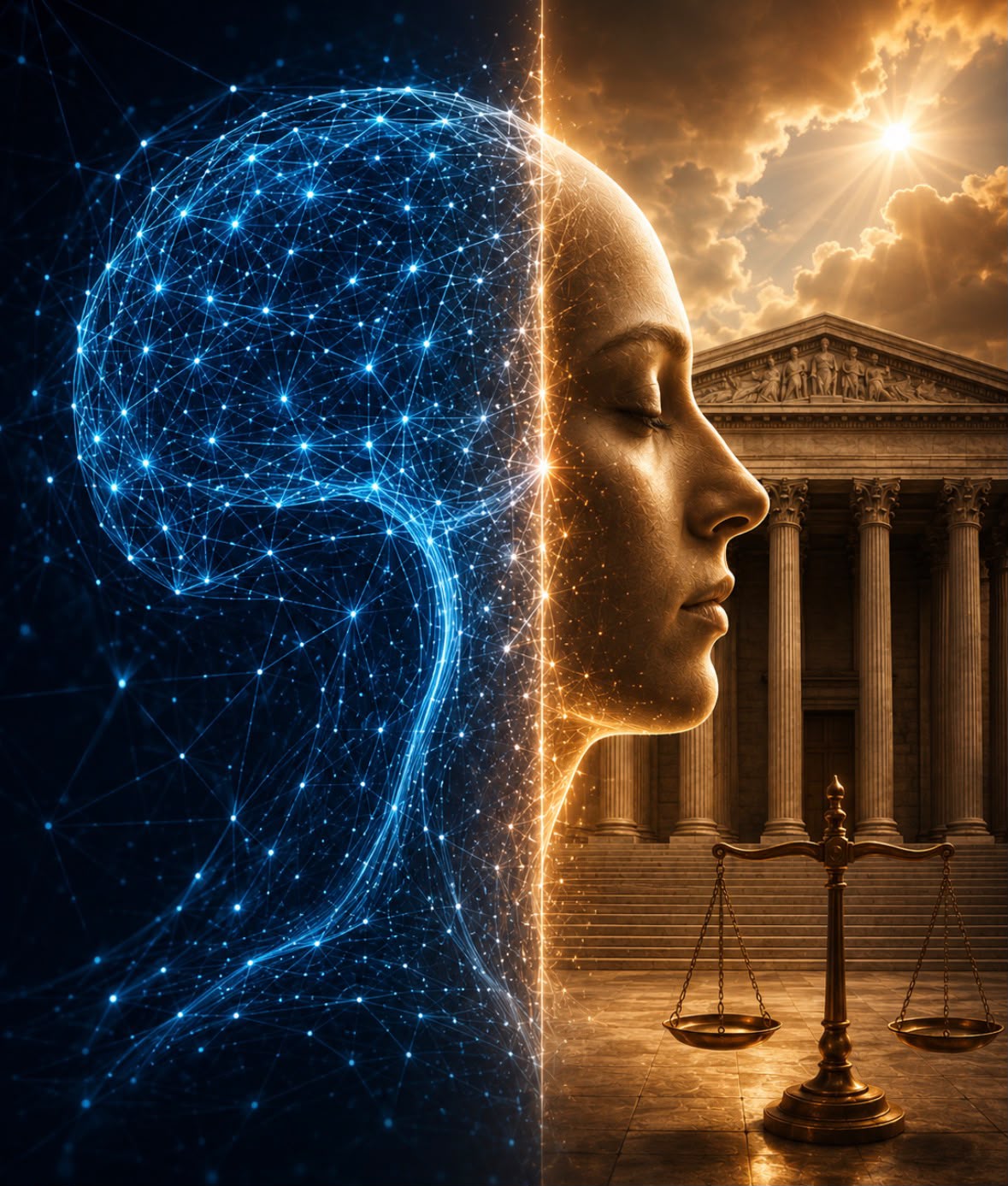
It is within this context that I propose the concept of Cognitive Constitutionalism: an evolution of contemporary constitutional theory that recognizes cognitive liberty, mental autonomy, and the integrity of human consciousness as fundamental constitutional interests deserving explicit legal protection.
The human mind is becoming the last constitutional frontier.
The constitutions of the twentieth century remain remarkably relevant, yet they are no longer sufficient on their own to govern the convergence of artificial intelligence, quantum technologies, neuroscience, and increasingly sophisticated algorithmic infrastructures. A new constitutional vision is required—one capable of protecting not only political freedoms, but also the cognitive conditions that make freedom itself possible.
This is not a call to slow scientific progress. On the contrary, artificial intelligence and quantum technologies represent one of the greatest opportunities in human history to advance medicine, scientific research, education, international cooperation, and sustainable development.
The real challenge is ensuring that constitutional progress evolves alongside technological progress.
How we respond to this challenge will shape not only the future of democracy, but also the preservation of human dignity and the prospects for lasting world peace.
Thanks To

