





















Technology, Trust, and the Duty to the Next Generation
Reflections on my visit to VRAcademi (the Academy), Dubai
By Prof. Gabriele Pao-Pei Andreoli
President, Institute for Advanced Studies and Cooperation (IASC)
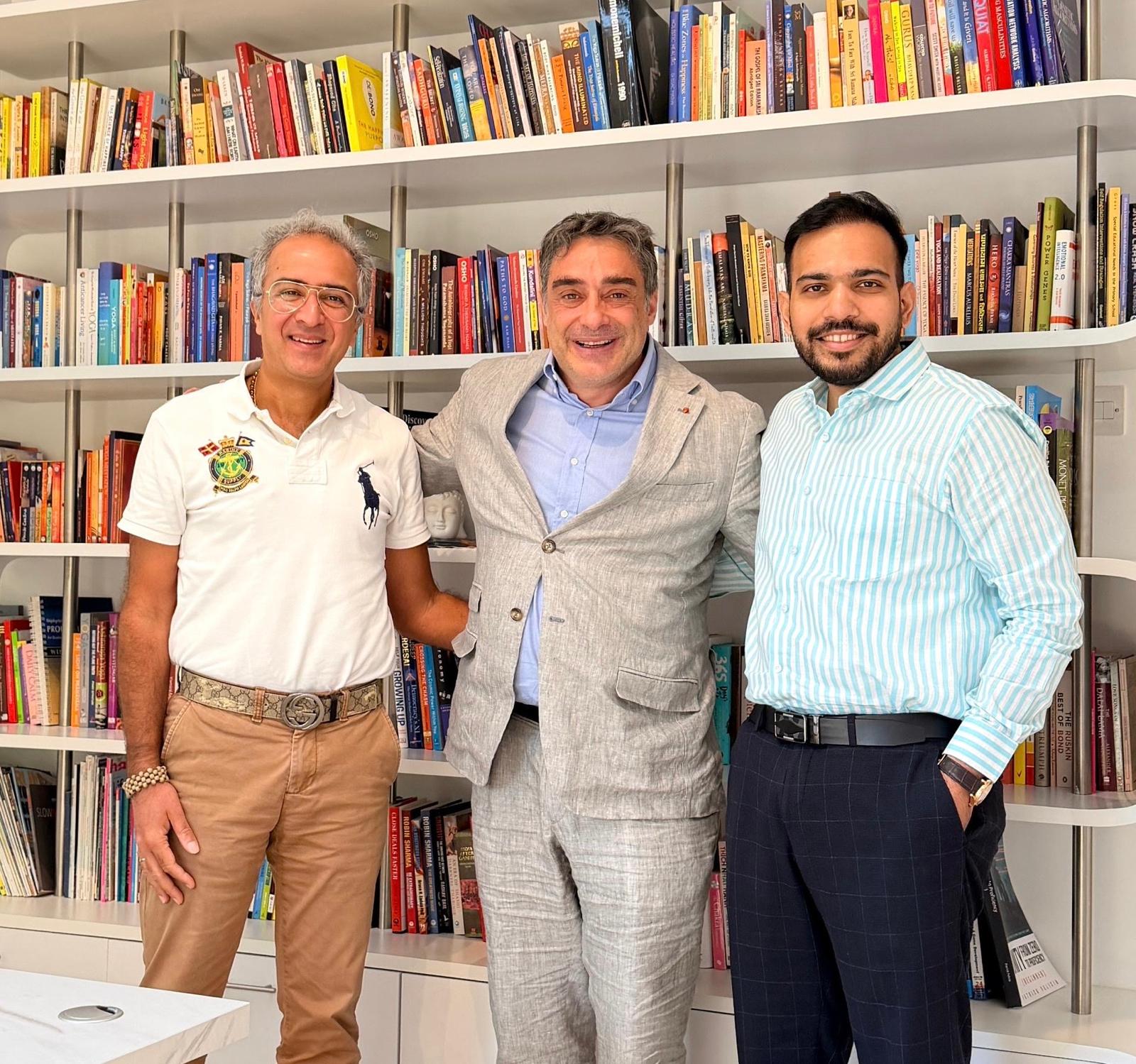
There are moments in an institutional journey when an official visit transcends protocol and becomes profoundly human. My recent visit, as President of the Institute for Advanced Studies and Cooperation, to VRAcademi (the Academy) in Dubai was one such moment.
I was warmly welcomed by the Academy’s founder, Sunny Ahuja, who personally guided me through the laboratories and learning spaces. The care with which he presented each programme and each technological environment conveyed not only entrepreneurial vision, but a deep and sincere commitment to the future of young people. I found myself deeply moved—not only in my institutional role, but also as a father and as a brother—because it was immediately evident how thoughtfully designed technology, when guided by purpose, can become an instrument of dignity, confidence, and hope.
Behind my long-standing commitment to science, technology, and education lies a personal experience that has profoundly shaped my ethical horizon. My brother fell ill at the age of twelve with a rare and devastating brain disease. In only a few years, that illness took from him not only his physical strength, but also the future he should have been allowed to imagine. Living alongside that reality marked me permanently. It taught me that helping others is not merely a professional choice, but a moral responsibility. For me, technology, research, and ethically guided innovation became concrete ways to transform personal loss into service for others.
It was through this deeply personal lens that I encountered VRAcademi.
A vision rooted in purpose, not only in innovation
VRAcademi is not simply an advanced educational facility equipped with cutting-edge tools. It is a carefully conceived ecosystem in which creativity, dignity, and self-confidence are nurtured through immersive technologies. Moving through its laboratories—dedicated to virtual reality, robotics, motion capture, artificial intelligence, and metaverse design—I perceived a rare coherence between vision and execution.
What impressed me most was the spirit animating the Academy: technology is never treated as an end in itself, but as a means to empower young minds, enabling them to explore, create, and reclaim authorship over their own learning paths.
This philosophy resonated deeply with me.
As one of the Academy’s founders has movingly recalled:
“Virtual reality gave me the freedom to explore worlds far beyond the hospital room. Soon, I wasn’t just using VR to play; I wanted to understand how these worlds were built.”
That initial spark—born from vulnerability, resilience, and curiosity—evolved into a shared mission with his father, technologist and entrepreneur Sonal Ahuja. Together, they transformed a personal experience into an educational vision: an Academy where technology becomes a tool for empowerment, healing, and imagination.
Building the classroom of the future
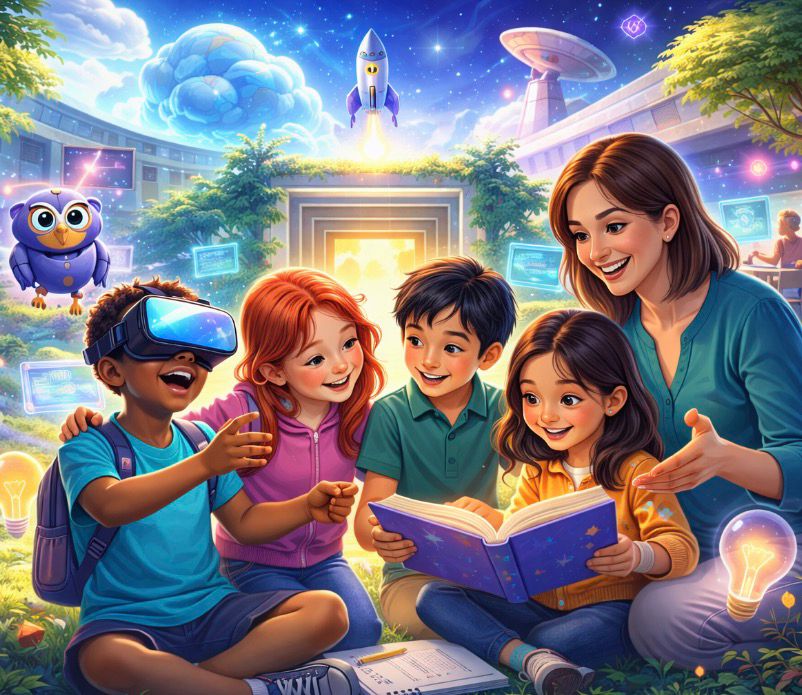
Founded in 2020, VRAcademi has grown into a recognised reference point for future-skills education. Its programmes combine creativity with solid technical training across disciplines such as artificial intelligence, coding, game development, virtual art, and immersive storytelling.
The results are both tangible and inspiring. Children as young as six have curated virtual art exhibitions; teenagers have designed complete immersive environments; even senior learners have approached emerging technologies with confidence and intellectual curiosity. This intergenerational openness is not accidental—it reflects a belief that innovation must remain inclusive, accessible, and deeply human.
Strategic collaborations, including initiatives with the UAE Ministry of AI and European climate-education projects, demonstrate how immersive learning can be aligned with broader societal objectives, from digital literacy to environmental responsibility.
The strategic relevance of the UAE
The choice of Dubai as the Academy’s home is far from incidental. The United Arab Emirates has shown a rare capacity to integrate education, innovation, entrepreneurship, and public vision into a coherent national strategy. Emerging technologies are not marginalised or feared; they are welcomed, governed, and responsibly integrated into long-term development.
This ecosystem allows institutions such as VRAcademi to thrive not only through financial support, but through a culture of collaboration, ambition, and ethical responsibility. It is precisely this environment that positions the UAE as a key global partner in shaping the future of education.
Toward a shared Multiverse of Trust
At IASC, we are convinced that the next phase of technological evolution must be grounded in trust—trust in knowledge, in institutions, and in the ethical use of innovation. For this reason, in the coming months, the Institute will actively work to explore the inclusion of VRAcademi (the Academy) within our broader initiative, the Multiverse of Trust.
The Multiverse of Trust is conceived as a safe, inclusive, and ethically grounded learning environment for the next generation—where science, technology, and conscience evolve together. The Academy already embodies this vision in a tangible and operational manner.
I sincerely hope that many more centres inspired by this same spirit and purpose will emerge around the world—places built not only with advanced hardware and software, but with care, responsibility, and a genuine commitment to the future of children and youth.
A personal closing reflection
When I see young people building worlds—virtual or real—with their own hands and minds, I cannot help but think of those who were never given that opportunity. Supporting initiatives such as VRAcademi is, for me, a way to honour that memory by investing in futures that remain open and full of possibility.
Technology, when guided by ethics and compassion, can become an instrument of healing and hope. VRAcademi (the Academy) stands as a compelling example of this truth—and as a reminder that the future of education must always remain, above all, human.
Thanks To

